

Key Takeaways
- —Land generally starts with lower capital, but if you plan to build on it, calculate the total cost accordingly.
- —While housing investment offers more predictable rental income, land values can be more volatile depending on regional development.
- —Ready homes are more liquid assets; the land buyer pool is narrower and the sales period may be longer.
- —Land does not generate direct income; its gain emerges upon sale or project development.
- —For short-term goals, housing may be more suitable; for long-term capital appreciation, land in the right area may be more suitable.
The question we get most from investors in Istanbul and Ankara is this: "I have a certain budget — should I buy land, or go straight for a finished apartment?" The right answer can't really be dismissed in a single sentence — because both serve different investor profiles, different levels of patience and different goals.
In this article, we compare the two options from five different angles: entry capital, risk, liquidity, income potential and time horizon.
Entry Capital: Land Usually Starts with Less Capital
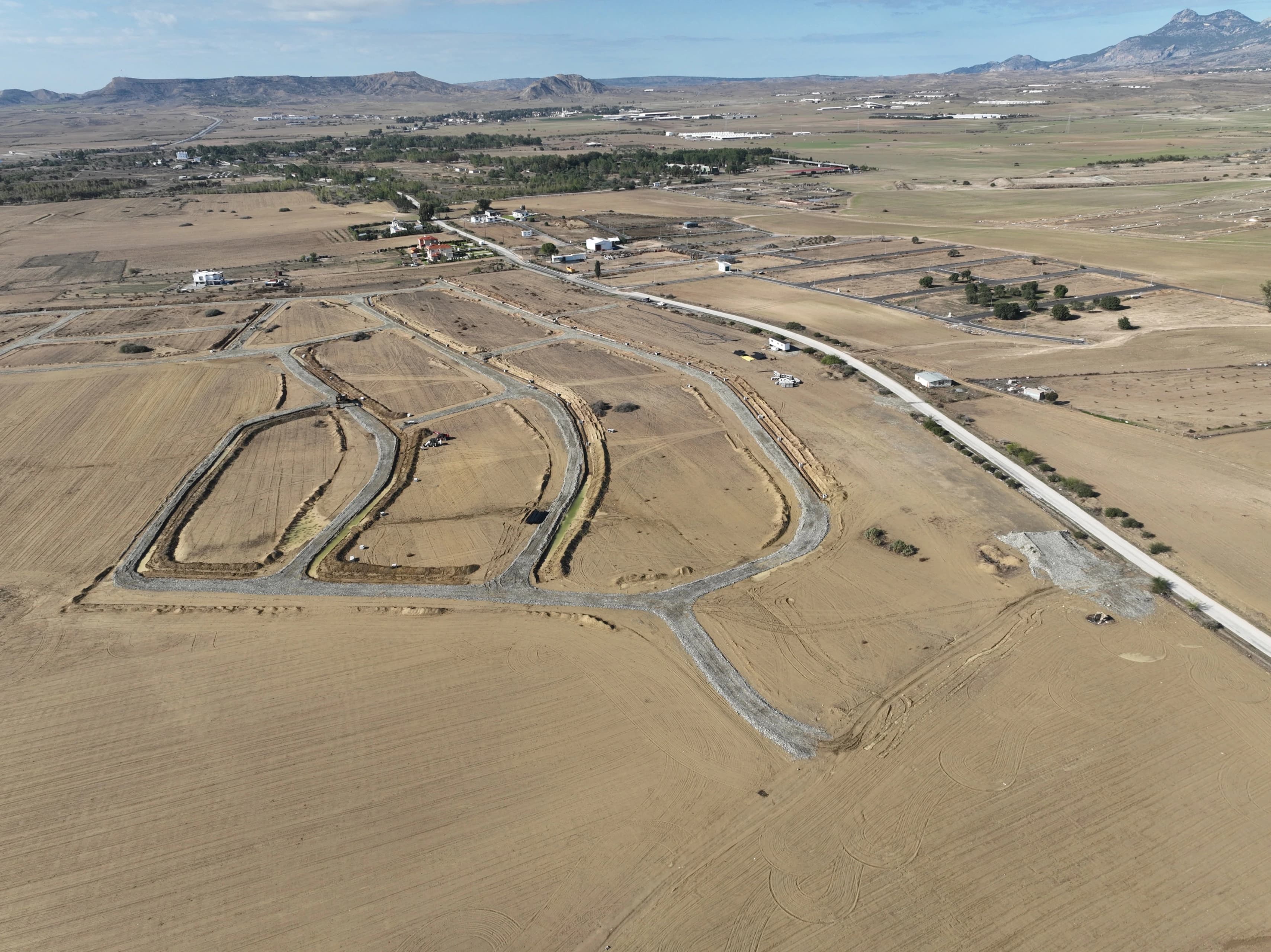
A 500-square-meter plot zoned for housing around Kyrenia, varying by area, can be bought with a budget well below that of a completed apartment. This is an attractive entry point especially for investors following a "let me get a foothold first, then grow" strategy. Keep in mind too that there are limits on surface area and number of units for foreign buyers on land (Law No. 52/2008; have your lawyer confirm the current limits). But there's a trap here: even if the land price looks low, if you plan to build on it, the total cost must be calculated together with the construction items — deciding by looking only at the land price can be misleading.
Risk Profile: Land Is More Volatile, Housing More Predictable
The value of land depends largely on the area's future development. When an area gains an infrastructure investment, a new road connection or a tourism project, land prices can jump quickly — but the opposite is also possible: an area expected to develop can stay stagnant for years. With ready-built housing, appreciation generally follows a slower but more predictable course, because the home is already usable and a concrete cash flow can be measured through rental yield. With land, a legal risk is added to this market risk; it's also possible to reduce that largely with the documents to be checked when buying land.
Liquidity: Housing Sells Faster, Land Requires More Patience
Renting out or selling a finished apartment is generally faster than disposing of land — because the buyer pool is wider. The student, working and holidaymaker tenant profile creates constant demand in areas like Kyrenia, Karaoğlanoğlu and Alsancak. The buyer of land, on the other hand, is a narrower pool: either an investor who'll develop their own project, or a contractor. This can lengthen the time it takes you to exit the land.
Income Potential: Rent or Capital Appreciation?
The real question here is: do you want regular cash flow, or are you expecting a big jump? Ready-built housing, when rented out, provides a certain return on an annual basis; this return varies by tourism season, area and property type, and you can see in advance what an apartment would earn after expenses with our rental yield calculator. Land, meanwhile, doesn't directly generate income for as long as you hold it — its potential gain emerges later at the time of sale or when you build on it.
Buying land and developing a project
Some investors combine the two: buying the land and developing a project on it, benefiting both from the land's appreciation and from the sale/rental potential of the finished product. This is a path that requires more capital and time but generally has a higher return as well; the first step of developing a project on land is also the correct subdivision and zoning planning of the parcel.
Time Horizon: Are You Thinking Short-Term or Long-Term?
If you plan to exit within 3-5 years, ready-built housing is generally the safer choice — because you earn a return even while waiting, through rental income. If you're thinking on a ten-year or longer horizon, land bought in the right area can carry serious appreciation potential, especially in developing areas (the intense project activity seen in recent years along the Çatalköy and Esentepe line is an example of this).
So Which Is Right for You?
There's no short answer, but you can decide by asking yourself these questions: Do you need regular income starting today, or can you leave your capital waiting for a few years? Do you have the time and experience to manage a construction process, or would you prefer a turnkey product? How much risk can you tolerate? The answers to these three questions actually bring with them the answer to the land-or-housing question as well.
Frequently Asked Questions
Is land investment always more profitable than housing?+
No, it depends on the area, timing and the investor's risk tolerance; it cannot be presented as a general rule.
Does it make sense to buy land and build on it myself?+
It can make sense with the right area and budget, but the construction process requires time and experience; working with a professional team reduces the risk.
Which areas are preferred more for rental income?+
Girne center, Karaoğlanoğlu and Alsancak are among the areas that stand out with demand from student and working tenants, but each area's own dynamics should also be evaluated separately.