

Key Takeaways
- —Lapta has two faces: the old stone-built village at the foot of the Kyrenia Mountains and the newer complexes on the sea side of the Kyrenia–Lapta road.
- —The village centre is about 14 km west of Kyrenia; the road to Kyrenia harbour is about 18 km, and a car is close to essential for daily life.
- —Lapta was historically known for its water: the 1832/33 Ottoman property survey records 25 watermills, and the Başpınar spring no longer flows as it once did.
- —Traces of ancient Lambousa lie on the coast; the Acheiropoietos Monastery and the church of Ayios Evlalios are inside a military zone and closed to visitors.
- —The village has a renovated health centre and a state secondary school; for night-time and emergency care, larger shops and nightlife you go to Kyrenia.
People who see Lapta for the first time often feel they have seen two different places. Up the hill, at the foot of the Kyrenia Mountains, is an old village of stone houses and narrow lanes. Down below, on either side of the Kyrenia–Lapta road, are complexes with pools and a coastline running down to the sea. Both carry the same name, yet daily life in each feels quite different. This guide covers what living in Lapta is actually like, from the sea and the water to the old village, shops and schools. The difficult parts are included too.
Where is Lapta and what is it like?
Lapta lies about 14 kilometres west of Kyrenia (Girne), on the narrow strip between the mountains and the sea. Together with Alsancak and Çamlıbel it comes under the Lapta-Alsancak-Çamlıbel Municipality, which handles property tax, building permits and rubbish collection. On the title deed you will see the village name, not the "Kyrenia" used in listings.
The old centre is not on the coast but up on the slope. Part of the reason is history and part of it is water, and we come to both below. The upshot is that in Lapta, "close to the sea" and "in the village" are rarely the same address.
Village centre or coastal side?
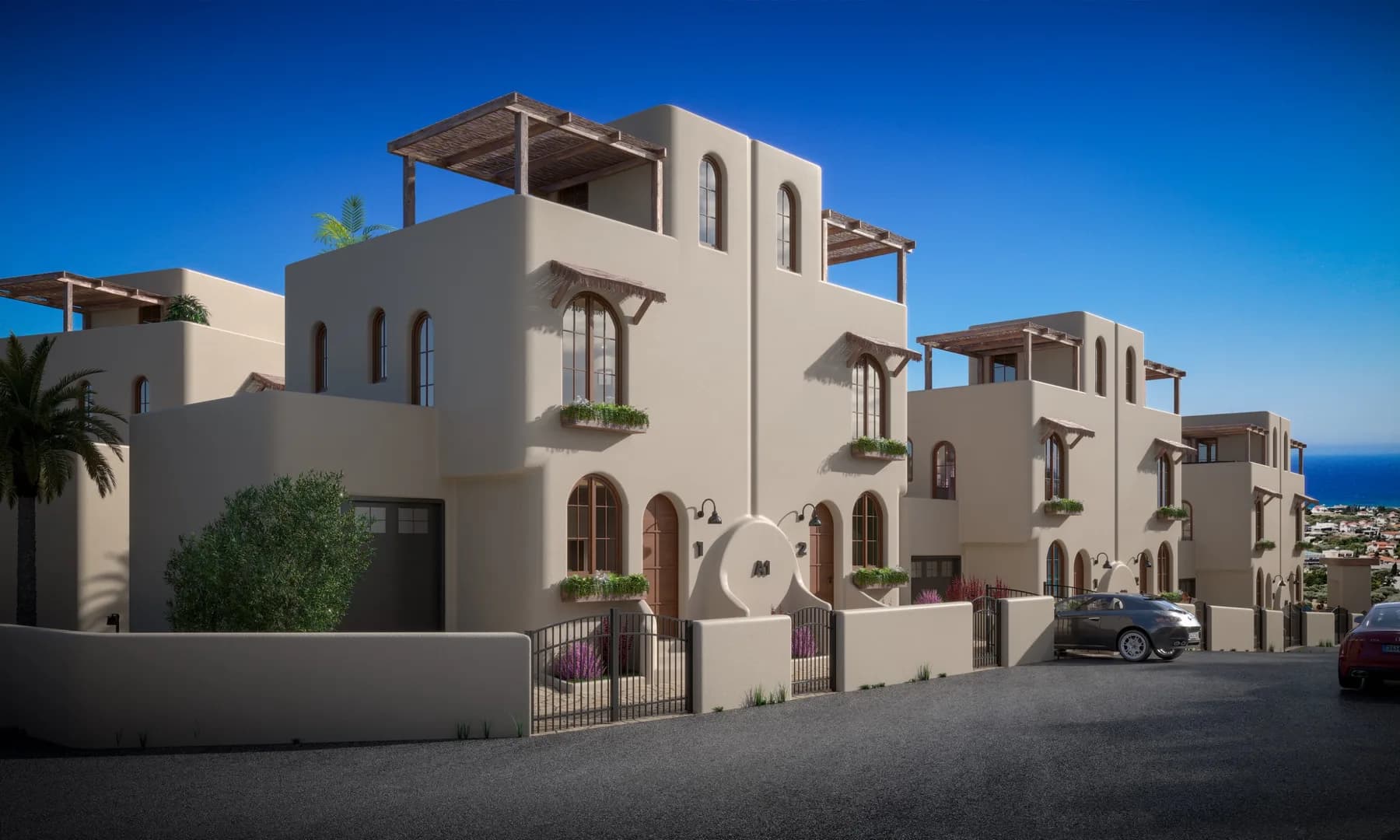
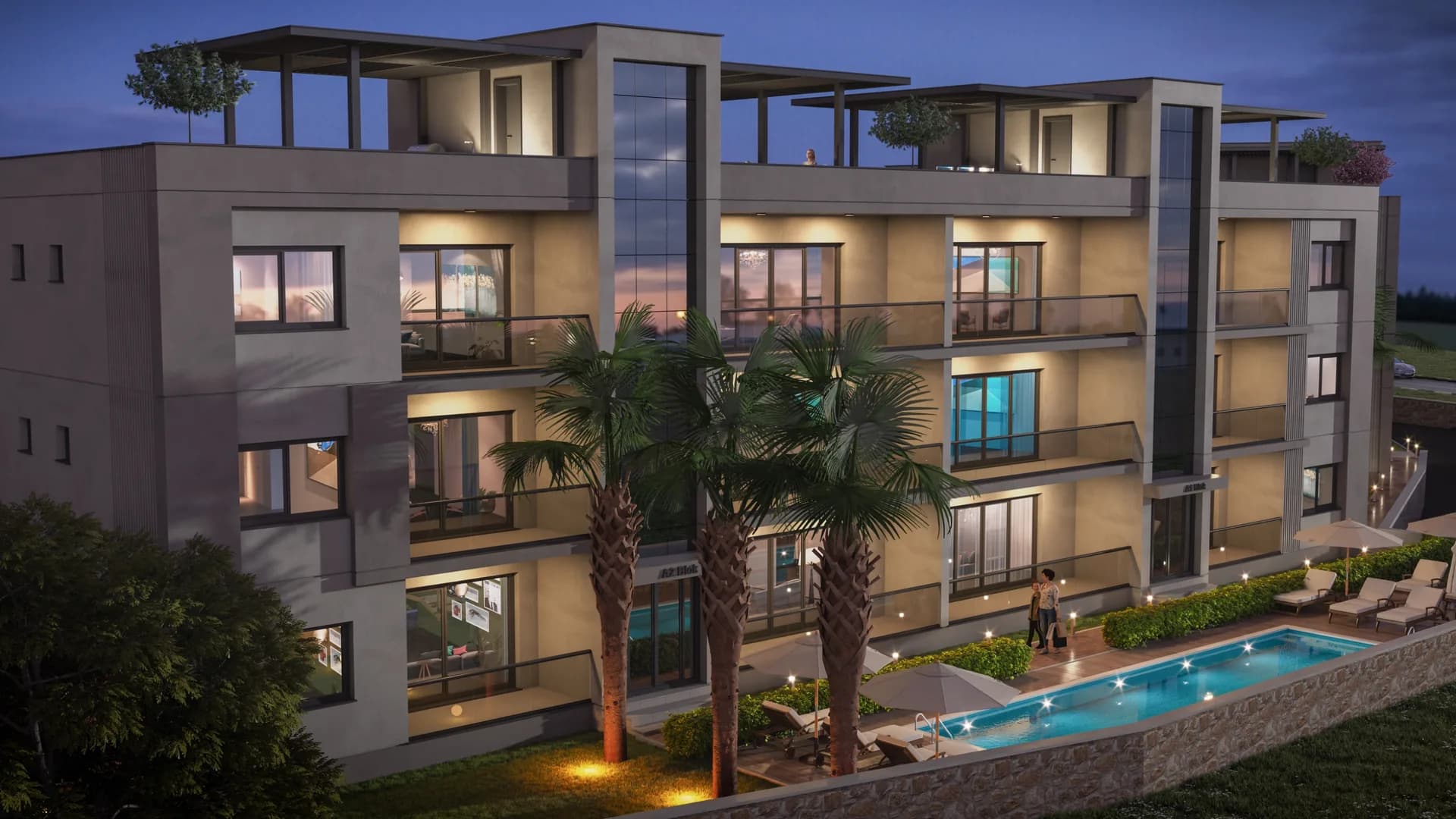
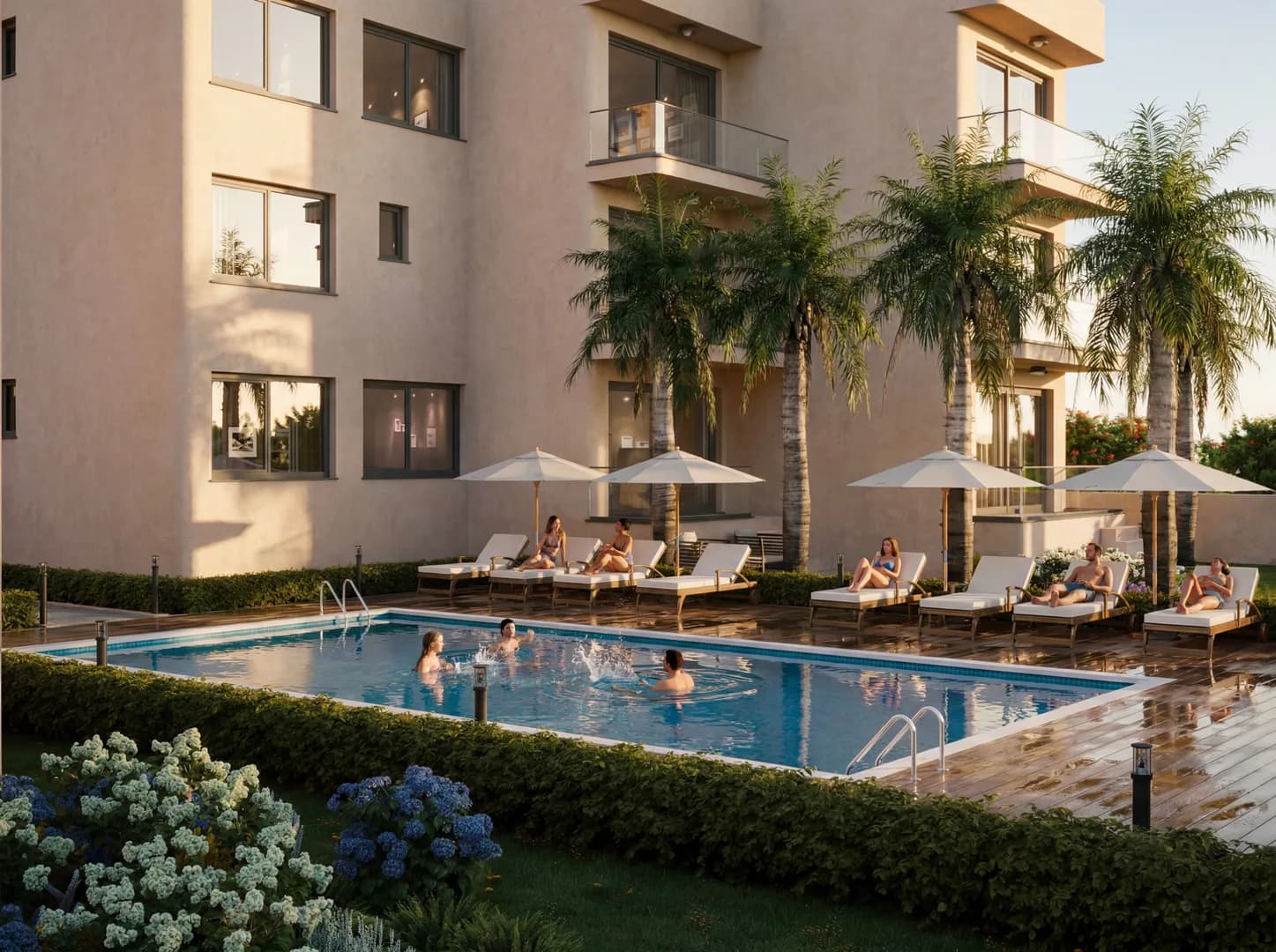
In old Lapta, houses are mostly stone-built, with courtyards or gardens, and set close together. The lanes are narrow and some were never meant for cars. On the coastal side you will find newer apartment complexes with pools, parking and shared gardens. Delivery dates and payment plans for the housing projects under way on Lapta's coastal side are listed on each project page, while ready and under-construction properties for sale appear in a single list with floor area and floor. Whichever you look at, check on a map which side of Lapta a listing actually points to.
Prices follow the same split, and the price range for sea view apartments in Lapta widens or narrows with the floor, the aspect and whatever stands in front of the building. This guide is about everyday life rather than prices.
The sea and the coast
Lapta's coast is not one long sandy beach. Small coves sit between rocky headlands, with pebbly and in places sandy entries into the water. Getting in is easier in front of the hotels and beach facilities; on the rocky stretches, water shoes help.
The swimming season is not limited to high summer. According to the Meteorological Office's long-term normals, the average annual sea temperature in North Cyprus is about 22 °C, and the August average is above 28 °C. In winter the coast goes quiet and is used mostly for walks and fishing.
The practical question is how you will get to the sea. Walking down from the village centre is easy; walking back up the hill is what puts most people off, so it usually becomes a short drive. In the coastal complexes the sea may be within walking distance, though you may have to cross the main road. When you view a home, walk that route once yourself.
Water, orchards and the mountain
For centuries Lapta was known for its water. The Başpınar spring above the village was the main source feeding the terraced gardens and mills. The 1832/33 Ottoman property survey records 25 watermills in Lapta, more than twenty oil mills and over two hundred mulberry gardens, with lemon gardens on the list as well.
The picture today is different. The spring has weakened sharply over recent decades because of wells and boreholes, and most of the old channels and mills now live on only in local memory. Even so, the hillside gardens, olive and carob trees and the ridge behind give Lapta a green look. When viewing a property, ask how the mains water reaches it and whether the house has a water tank and a booster pump. On the hillside this matters even more.
Seasons and climate
Lapta has a Mediterranean climate: hot, dry summers and mild winters with modest rainfall. According to the Meteorological Office, the north coast and the Kyrenia Mountains, along with the Karpaz, are the wettest parts of the north of the island, and December and January are the wettest months. Stone houses on the slope can feel damp in winter, so check the walls, the roof and the heating. Summers, for their part, are not something most people get through without air conditioning.
Historic character: from Lambousa to stone houses
About 3 kilometres north of today's village, on the coast, are the remains of ancient Lambousa. Counted among the city-kingdoms of ancient Cyprus, it was badly damaged during the Arab raids, and its people repeatedly took refuge inland, on the slope where the water was. Local tradition has it that stones from the old houses were reused in the new village. Rock-cut fish ponds and tombs on the shore are among the visible traces of that past.
The Acheiropoietos Monastery and the church of Ayios Evlalios on the coast are inside a military zone and closed to visitors. A hoard of early Byzantine silver found near the monastery in 1897, known as the Lambousa Treasure, is now held in museums abroad. Before setting out, it is worth asking locally which spots you can actually reach.
The real character of old Lapta is in the village itself: stone-walled houses, courtyards and steep, narrow lanes. Some of these houses have been repaired and are lived in again; others stand empty. If you are thinking of buying one, restoring a stone building to its original character is a very different process from buying a new flat. The condition of the walls, the roof, damp and the permits needed will set the budget.
The village calendar
The municipality holds the Lapta Tourism Festival on a regular basis. In his statements about the festival, the mayor describes Lapta as the area where Turkish Cypriot tourism began and says the aim is to promote the area's natural, cultural and historical heritage. Outside festival time, social life revolves mostly around the village coffee houses and the restaurants along the coast. For nightlife you need to head into Kyrenia; Lapta evenings are quiet.
Daily life: transport, health, schools and shopping
Getting around and the distance to Kyrenia
By road it is about 18 kilometres from the village centre to Kyrenia harbour. Depending on traffic it can take close to half an hour, and less from the coastal complexes. There is a Kyrenia–Lapta minibus route, but services thin out after the early evening. As a result, most residents drive, and the main road can be busy at rush hour.
Health, schools and shopping
The village has the Lapta Health Centre, run by the Ministry of Health; its building has been renovated and extended with an additional service area. The mayor, however, says the centre does not fully meet the area's needs and that a facility open around the clock with on-call doctors is required. In practice, plan on going to Kyrenia at night and in emergencies.
For schooling, the village has a state secondary school, Lapta Yavuzlar Lisesi. Check primary, middle and private school options with the Ministry of Education or with the schools directly; English-medium options in particular need confirming. Some families look at how everyday life works in Alsancak, in the same municipality, and weigh the two villages together. Everyday needs such as a supermarket and a pharmacy are covered in the village and along the main road; for bigger shopping trips and private hospitals you go into Kyrenia.
Who suits Lapta, and who may find it hard?
Lapta appeals mostly to people looking for a quieter life. Retirees may like the mild winters and the village houses with gardens. Remote workers get distance from the bustle of Kyrenia while staying about half an hour from it. For families with children, the pool and shared gardens of the coastal complexes make daily life easier, while the village itself offers gardens and neighbours.
There are downsides, and it is better to know them from the start:
Hills. Many lanes in the village centre are steep and narrow. If you have elderly relatives, a pushchair or daily shopping to carry, try them on foot.
Parking. Most old houses have no covered parking, and parking on the street can be difficult.
Quiet winters. The coast that buzzes in summer goes quiet in winter, and some restaurants and facilities work shorter hours out of season.
Car dependence. Public transport is weak in the evenings and at weekends.
Healthcare. The village health centre is not set up for nights and emergencies, so those mean a trip to Kyrenia.
Before you decide, visit Lapta at different times: a weekday morning on the main road and a winter evening in the village. If you would also like to see our Belmaris and Mireva projects on the coastal side, our team can arrange a viewing and show you around the area.
Frequently Asked Questions
How far is Lapta from Kyrenia?+
The village centre is about 14 km west of Kyrenia. By road it is about 18 km and can take close to half an hour depending on traffic, less from the coastal complexes. There is a Kyrenia–Lapta minibus, but evening services are sparse.
Do you need a car to live in Lapta?+
Mostly, yes. The minibus works during the day but thins out in the evenings and at weekends. Walking from the hillside village to the coast or the shops is not always practical because of the climb back.
Are there health services and schools in Lapta?+
The village has the recently renovated Lapta Health Centre, run by the Ministry of Health, and a state secondary school, Lapta Yavuzlar Lisesi. At night and in emergencies you need to go to Kyrenia; confirm other school options with the Ministry of Education.
Can you visit the historic sites in Lapta?+
You can walk the old village and its stone houses, and the coast has traces of ancient Lambousa such as rock-cut fish ponds and tombs. The Acheiropoietos Monastery and the church of Ayios Evlalios are inside a military zone and closed to visitors.
What is Lapta like in winter?+
Winters are mild, but the north coast and the Kyrenia Mountains are among the wettest parts of the north of the island, with most rain in December and January. The coast goes quiet, and damp and heating matter more in the old stone houses.